Covenant and Dispensational Theology Part 1 Comparisons and Implications YouTube

Dispensationalism - In Dispensational Theology the Holy Spirit has always existed, but He did not play an active role until Pentecost. Believers are in Christ. Covenant Theology - Believers are all of God's elect who have through Grace by Faith in Jesus been redeemed. There have been believers throughout time.
1698 Federalism vs 20th Century Reformed Baptists Covenant theology, Theology, The covenant

In regards to his views on the Mosaic Law, he seems closer to new covenant theology than covenant theology, although once again it would not work to say that he precisely falls within that category. Further Resources. On covenant theology: O. Palmer Robertson, Christ of the Covenants Westminster Confession of Faith, chapter 7
Dispensationalism Wikipedia Revelation bible study, Revelation bible, Bible teachings

Dispensationalism is a popular and widespread way of reading the Bible. It originated in the nineteenth century in the teaching of John Nelson Darby and was popularized in the United States through the Bible Conference movement. Its growth was spurred on even more through the publication of the Scofield Reference Bible, which was published in 1909.
Introduction to Dispensationalism Scofield Biblical Institute

Ligon Duncan (MDiv, Covenant Theological Seminary; PhD, University of Edinburgh) is the Chancellor & CEO of Reformed Theological Seminary, the John E. Richards Professor of Systematic and Historical Theology, and the President of RTS Jackson. He has authored, co-authored, edited, or contributed to numerous books. You can follow him on Twitter.
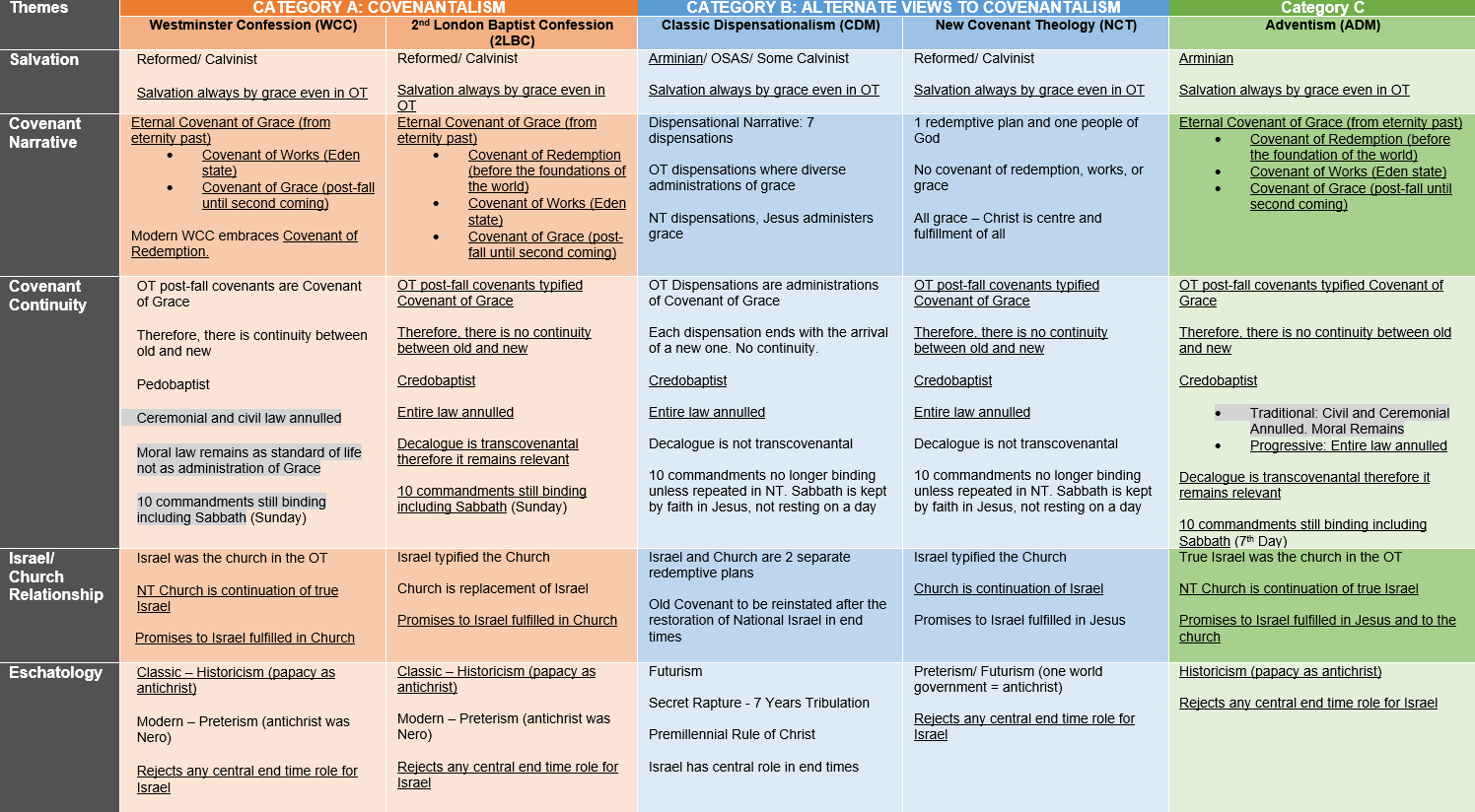
Church In Toronto THREE SCHOOLS OF THEOLOGY — Dispensational, Covenant, & New Covenant Views

Covenant Theology VS Dispensationalism. What are the major differences between covenant theology and dispensationalism? That's a question we get a lot. Jon and Justin sit down to discuss the differences under three main headings: Christ in all of Scripture, law/gospel distinction, and the covenant of works (active obedience of Christ).
Covenant Theology vs. Dispensationalism (And Its Varieties) — Knowing Scripture

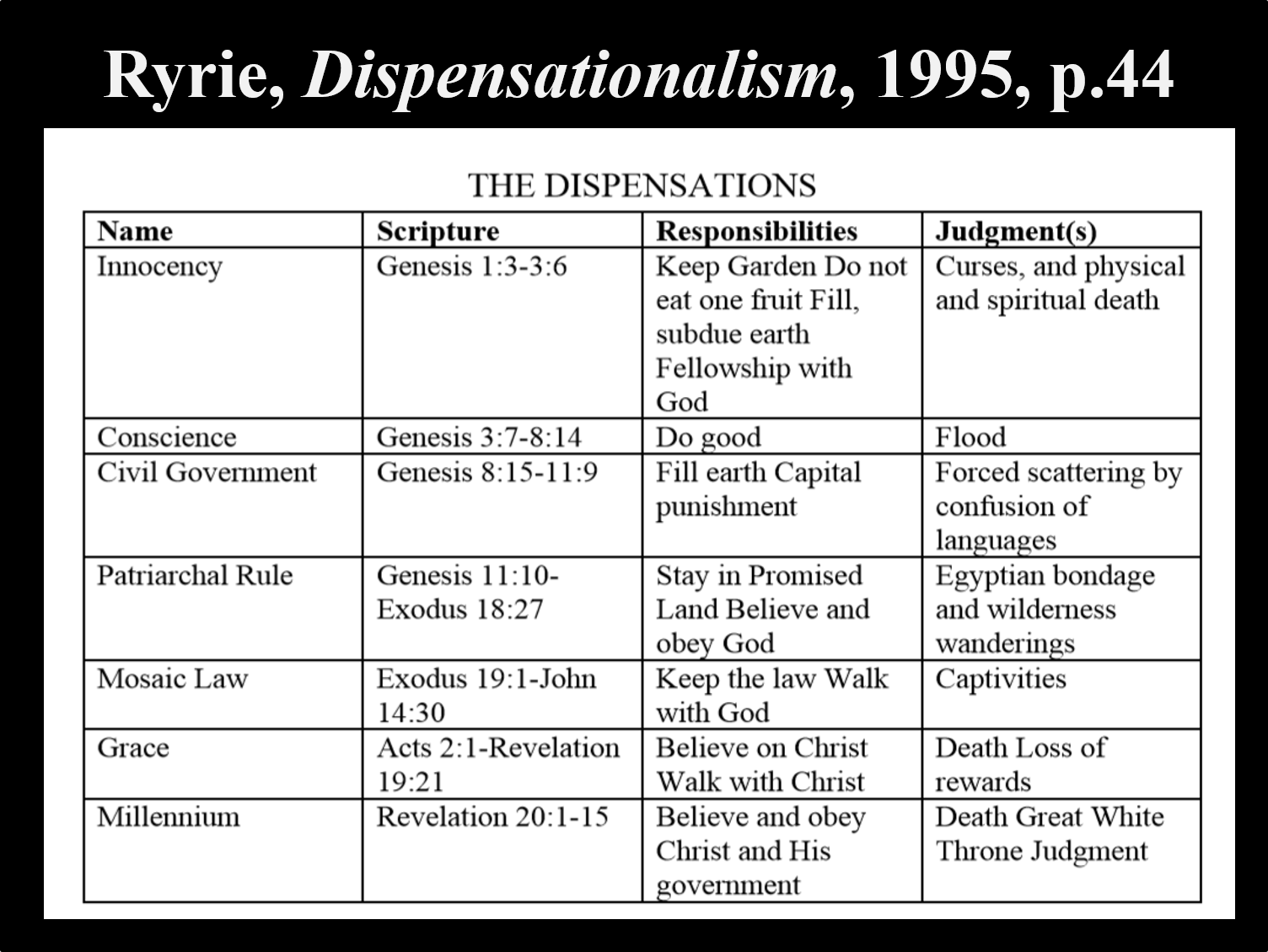
Covenant Theology Books. 9. Dispensational Theology. Is not the same as a dispensation, or 7 dispensations. God progressively works out His reign over creation. Through a series of interconnected administrations. Climaxing in the mediatorial kingdom ruled by Christ. This program extends into the eternal state.
Dispensations and covenants He is my everything. Pinterest

The church is part of the one people of God and yet is covenantally new. The church is God's new creation and remains forever, consisting of Jews and Gentiles together. The church receives all of God's promises through Jesus Christ. Rom 9-11 could speak of a mass gathering of Jews into the church at the return of Christ.
Chart Dispensationalism vs. Covenant Theology

Dispensationalism. Covenant theology helps us to see the grand and glorious unity in Scripture. Dispensationalists argue that throughout history, God has had two peoples: there is Israel and there is the church. And he has two destinies for those two peoples: Israel's is an earthly one relating to the land and to the temple, and the church.
Covenant Theology vs. Dispensationalism PDF Dispensationalism Covenant Theology

However, dispensationalism is a fairly modern view, arising in the mid-1800s. Historically, the Christian church held to a stronger continuity between the old and new covenants, or what is known as covenant theology. This is true of the churches coming out of the Reformation, but it is especially true of the Calvinistic branches, the Reformed.
Covenant Theology Systems Illustation
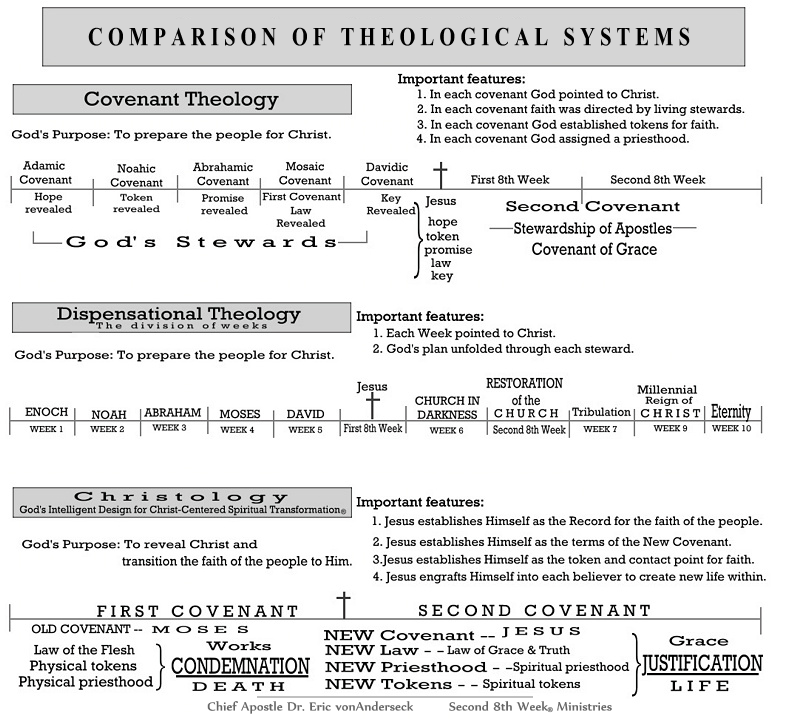
Covenant Theology, which became significant during the Reformation and preceded dispensational theology by a few centuries, is also recognized as Reformed Theology.The Westminster Confession of Faith defines covenant theology, which highlights Adam and Christ as the two "covenant heads" between God and man. A covenant head is the one who represents the group under which a covenant falls.
Dispensationalism versus Covenantalism Evidence Unseen
Covenant. The three covenants of Covenant Theology are theological covenants; that is, they are a systematic way to describe God's plan of salvation for the world. These theological covenants are: the covenant of works, the covenant of redemption and the covenant of grace. Covenant of Works
Are Adventists OldCovenant Christians? (Part 5) Sabbath School Net
For this reason, putting together the biblical covenants is central to the doing of biblical and systematic theology and to the theological conclusions we draw from Scripture in many doctrinal areas. If we are going to make progress in resolving disagreements within evangelical theology, especially between covenant theology and dispensationalism, we must face head on how we understand the.
My Thoughts on Covenant Theology and Dispensationalism Nordic Preacher
The book Covenantal and Dispensational Theologies: Four Views on the Continuity of Scripture allows four authors to expound the four most common systems. Michael Horton explains the way covenant theology puts the Bible together. Stephen Wellum takes a view called progressive covenantalism.
The ANVIL Newsletter Covenant Theology Hebrews 8

Instead, the church is God's new-creation people, Christ's bride who lasts forever ( Revelation 21:1-4 ). Dispensationalism and its covenantal construction does not sufficiently account for these truths. But second, against covenant theology, the church is also new and constituted differently from Israel.
Covenant Vs Dispensational Theology Chart

Within this framework, there are three main covenants: the covenant of works, the covenant of grace, and the covenant of redemption. Covenant theology is also known as coventalism, federal theology, or federalism. The covenant of works started in the beginning with the Garden of Eden. In Genesis 2:16-17 (KJV) the Bible says "And the Lord God.
Covenant Theology vs. Dispensationalism; What's the Difference?Lord's Library

Rational for the Dispensational system. Definition: "A dispensation is a period of time during which man is tested in respect of obedience to some specific revelation of the will of God.". Scofield Reference Bible "A dispensation is a distinguishable economy in the outworking of God's purpose.". Charles Ryrie.